
The Great Parade
A festival of wonder rolls into town: window displays for Hermès Italia in Milan and Florence.
%20(1).png)
A parade arrives in the city and invites us aboard. Like the great processions of the past, it advances with a joyful rhythm, in a river of colour and anticipation. These are Wunderkammern on wheels: festive wagons that gather experiences from around the world and carry them into town. Each window reveals a cabinet-cart, a nomadic architecture that is at once container and stage. Within it, Hermès objects transform into instruments of adventure. Carrés rise like coloured sails, Twillys dance in the wind like musical ribbons, belts become reins, ceramics mark the rhythm of the journey while shoes keep the pace.
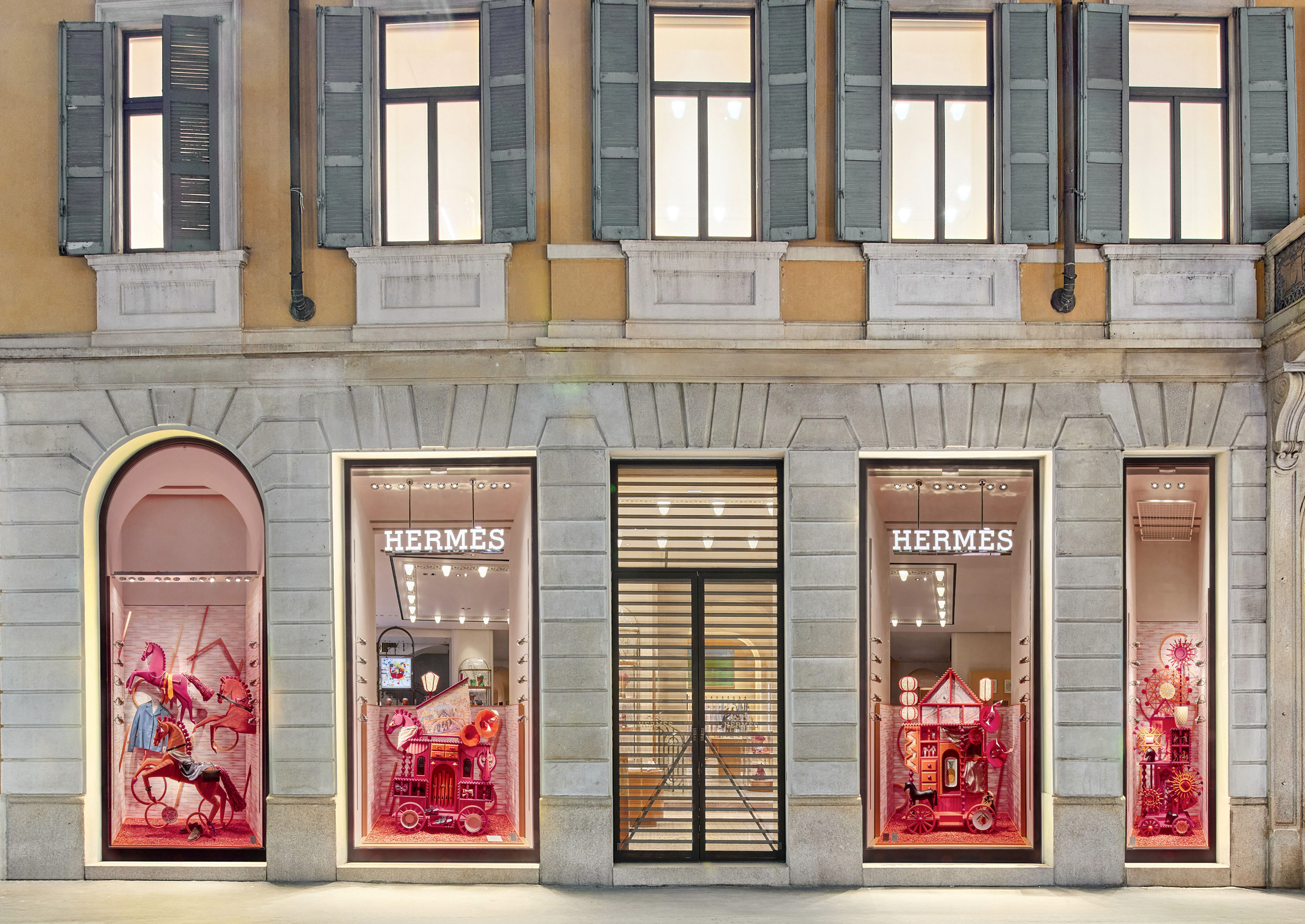
At the head of the parade, the horses take flight: suspended in mid-air, they shed their familiar form and turn into exotic creatures. From there, each wagon tells a chapter of the voyage — routes and instruments, memories and inventions, passages into other worlds, colours that come alive in movement. With every new window the wonder changes shape, until the final cart, where a carousel of stars seems to turn above us like an invitation to join the caravan. The parade crosses the city, and the wonder stays with us.
The parade crosses the city, and the wonder stays with us. Installed from September to November 2026 at the Hermès flagship store in Via Montenapoleone, Milan, and at the Hermès boutique in Florence.
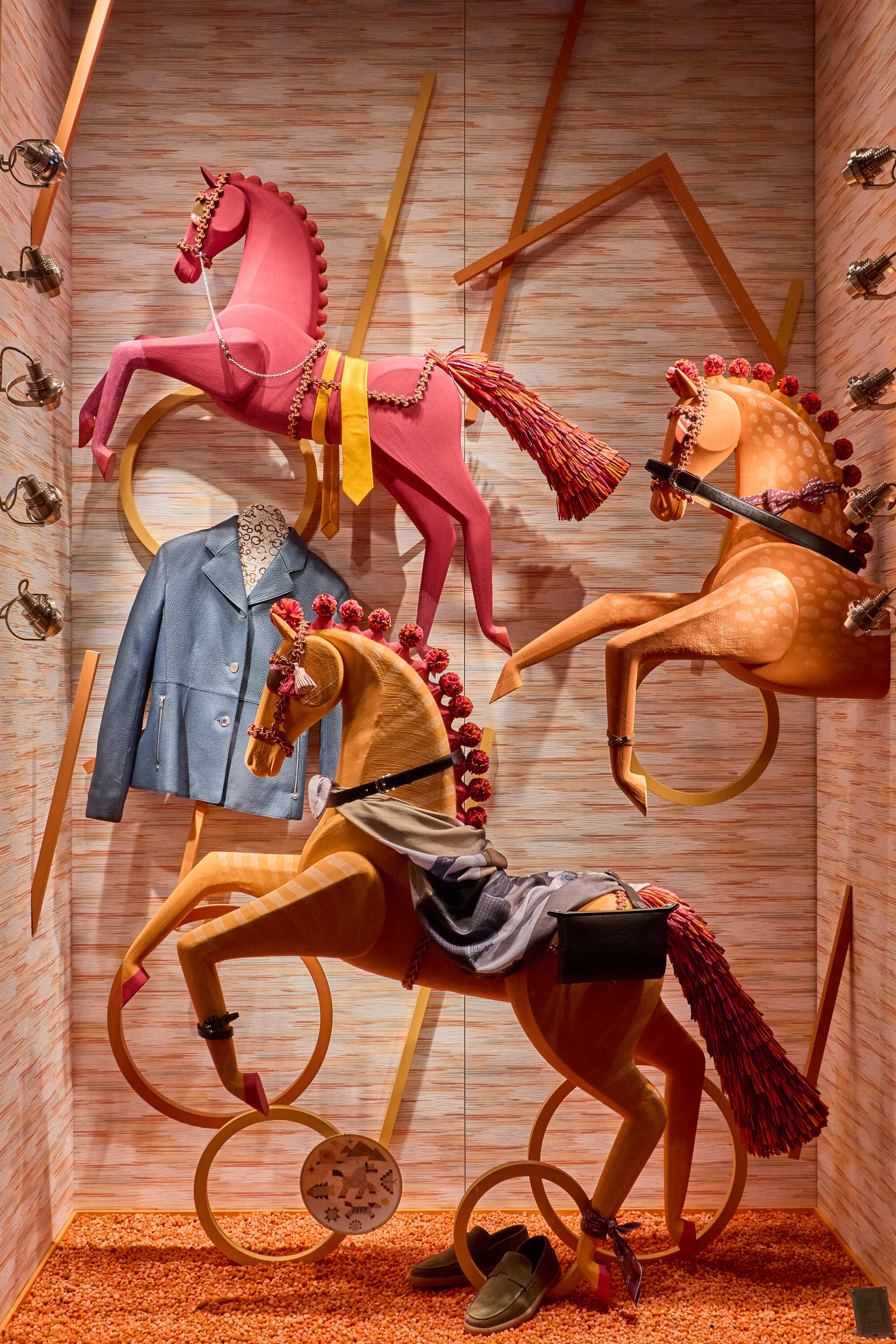
The project draws directly on reclaimed materials from the maison's own production, given a second life within the parade. Leathers, cottons and printed silks became its raw substance: leather offcuts were cut and assembled into the figures, harnesses and heraldic panels that populate the carts, while cottons printed with equestrian motifs were stretched over hand-built frames to become the glowing lanterns that light the procession. Working from what already exists, rather than from what is newly made, shaped both the palette and the logic of the whole installation.

To dress the parade, the studio worked with Antica Fabbrica Passamanerie Massia Vittorio 1843, a Turin-based passementerie house in operation since 1843 and one of the last Italian workshops of its kind. Together we developed a family of raffia trimmings made specifically for the project: horse manes and tails, bridles, saddle edging, pompoms, tassels and the radiating friezes that crown the carts and ferris wheels. Each element was hand-finished in raffia dyed to the palette of the parade, bringing a tactile, artisanal warmth to structures otherwise built from painted wood and leather.


